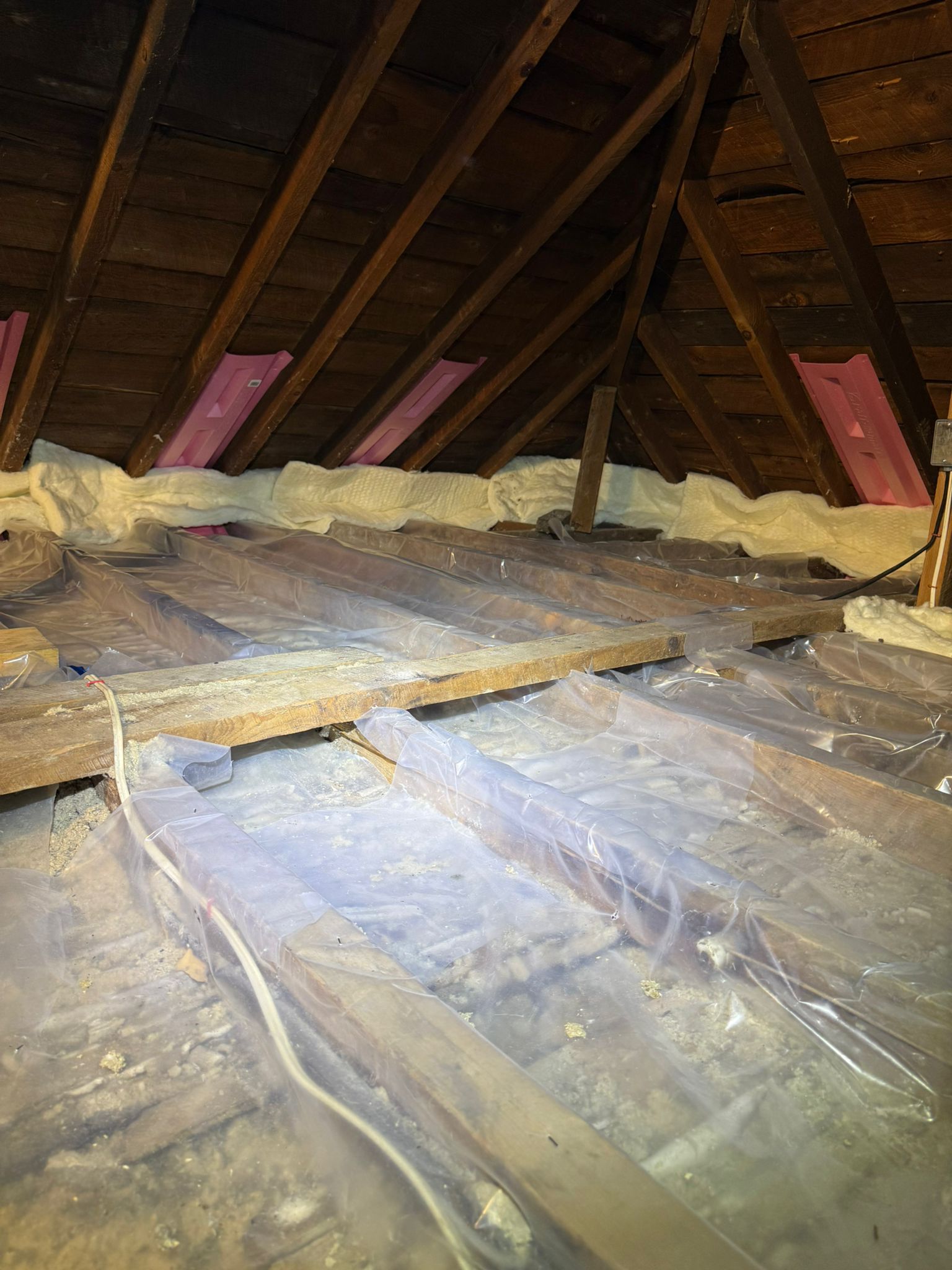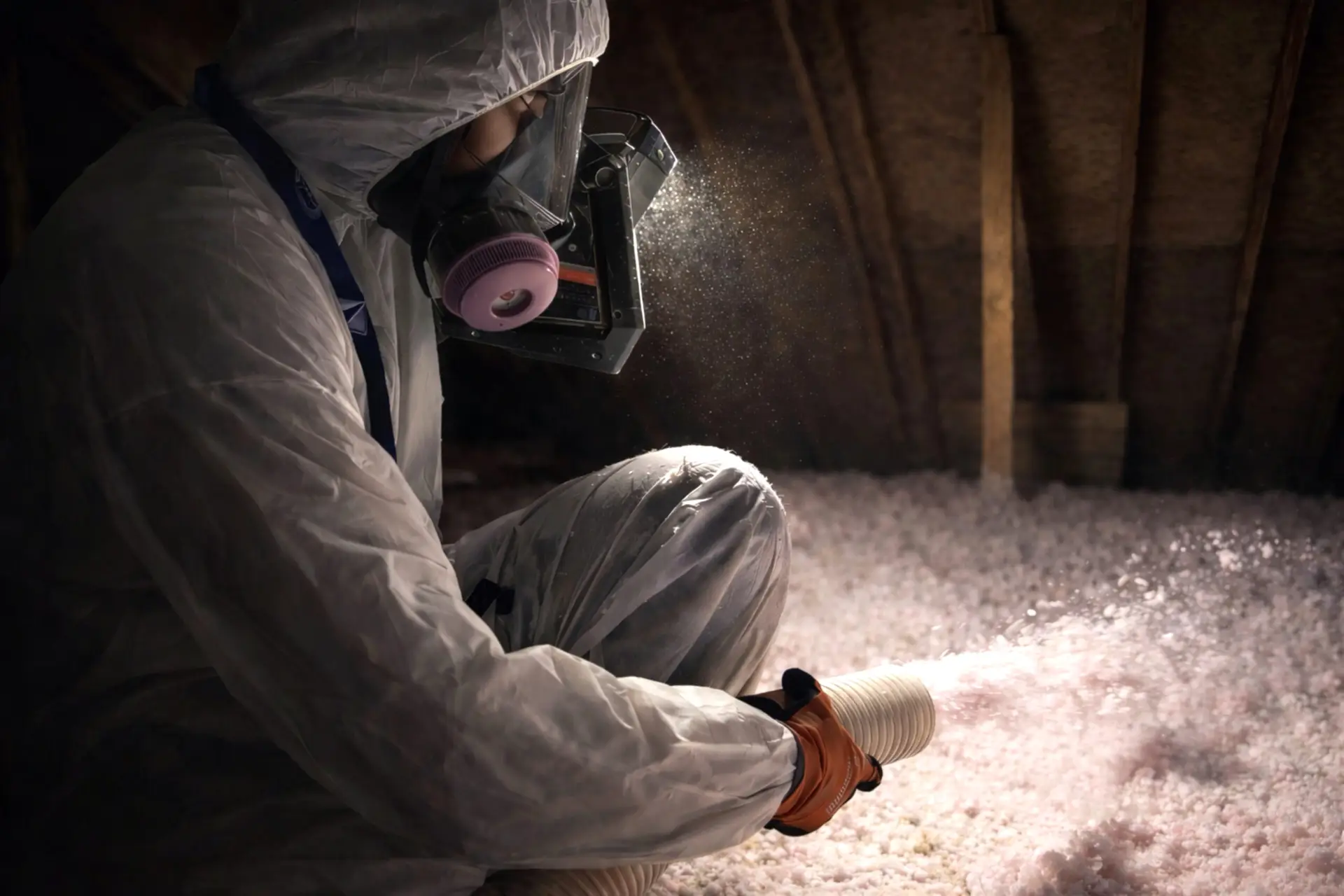
You’ve decided to insulate. You know there’s a rebate. What you probably don’t know is what actually happens next — who shows up, in what order, how long it takes, and what you’re expected to have on hand.
That gap is where most of the problems occur. Not in qualifying, but in the sequence.
This is the full process, both routes, with the points where people lose the rebate flagged as they come up. Verified against the official program as of July 2026.
First: which route are you on?
Ontario’s Home Renovation Savings program has two paths and you can only use one for the same measure.
| Standalone attic | Bundled upgrades | |
|---|---|---|
| Energy assessment | Not required | Required — before and after |
| Upgrades needed | Attic only | Two or more |
| Attic maximum | $1,250 | $1,500 |
| Total insulation maximum | $1,250 + $750 | $7,700 |
| Contractor | Closed pre-approved list only | Any qualified contractor |
| Realistic timeline | Weeks | Weeks to months |
Short version: if the attic is genuinely all you’re doing, the standalone path is faster. If you have two or more measures — and most Markham homes past their first decade do — the bundled path pays substantially more.
Route A: Standalone attic — step by step
Step 1 — Confirm eligibility on the official site, before anything else
Go to homerenovationsavings.ca/without-assessment/attic and complete the eligibility form.
You’ll need to know: whether you own the home, your housing type, how you heat, and roughly how much insulation is already up there.
The form returns the list of participating contractors for your area. This matters — the standalone path is delivered only by contractors on a closed pre-approved list, and registration for that stream is currently closed.
Step 2 — Measure what you have
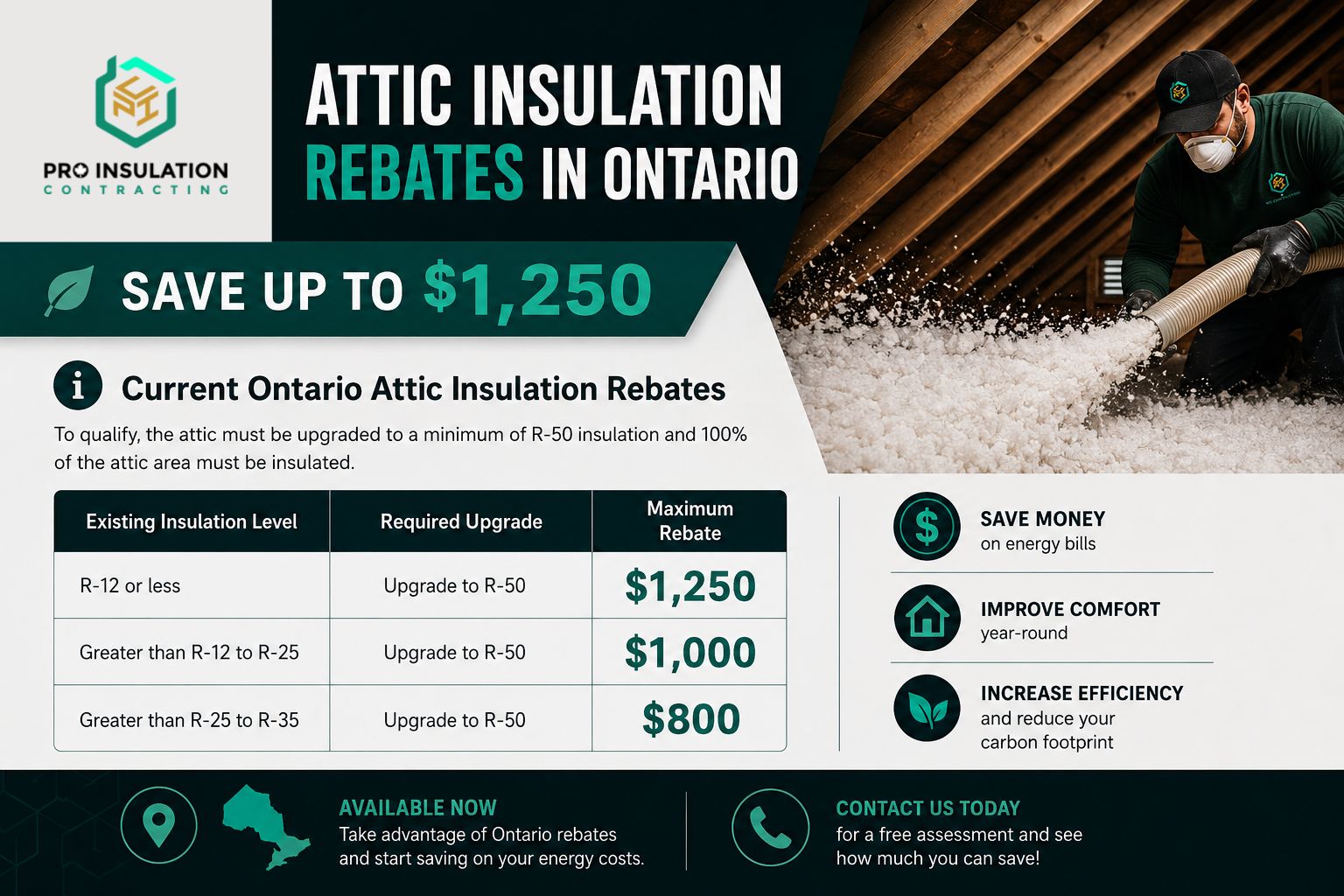
Your rebate bracket depends entirely on your existing R-value:
| Existing insulation | Must reach | Maximum |
|---|---|---|
| R-12 or less | R-50 | $1,250 |
| Over R-12, up to R-25 | R-50 | $1,000 |
| Over R-25, up to R-35 | R-50 | $800 |
| Over R-35 | — | Not eligible |
Cathedral ceilings and flat roofs are separate: $750 (to R-28 from ≤R-25) or $650 (to R-20 from ≤R-12).
You can measure the depth yourself in five minutes. Here’s how →
Step 3 — Get a quote, and check the math
The rebate is 50% of your total attic insulation cost after tax, capped at your bracket maximum. Not a flat cheque.
| Existing R | Project cost incl. HST | 50% of cost | Cap | You receive |
|---|---|---|---|---|
| R-10 | $1,600 | $800 | $1,250 | $800 |
| R-10 | $3,000 | $1,500 | $1,250 | $1,250 |
| R-20 | $3,000 | $1,500 | $1,000 | $1,000 |
Illustrative figures, not quoted prices.
Ask for this written into your quote. A contractor who won’t put the bracket, the cost, and the resulting net on paper is leaving you to find out later.
⚠️ Loss point 2. The whole roof assembly has to be insulated — 100% of the area. Not the accessible portion, not everything except the awkward section over the addition. Confirm the scope covers all of it.
Step 4 — Work is completed
Step 5 — Your contractor submits the documentation
Step 6 — Payment
Enbridge Gas customers typically receive it as a bill credit; electrically heated homes by cheque. Processing time varies with program volume — ask your contractor what they’re currently seeing rather than relying on a published estimate.
Route B: Bundled upgrades — step by step
More steps, more money, and a strict order.
Step 1 — Book the pre-retrofit energy assessment
A registered energy advisor from an approved service organisation visits your home. They’ll typically run a blower door test, assess insulation levels, windows, heating equipment and air tightness, and model the house.
There is a fee for the assessment. Ask what it is when you book — it varies by service organisation.
Step 2 — Receive your Renovation Upgrade Report
The advisor produces a report listing recommended upgrades.
Read the report properly when it arrives. It’s the document the entire claim rests on.
Step 3 — Complete at least two recommended upgrades
If budget is the constraint, pick a cheap second measure rather than deferring. Air sealing and the foundation header both qualify and both are inexpensive relative to the attic.
Step 4 — Book the follow-up assessment
The same energy advisor returns, re-tests, and confirms what was completed.
Step 5 — Rebates are issued after the advisor submits the closeout documentation
What the bundled path pays
| Upgrade | Requirement | Rebate |
|---|---|---|
| Attic | To R-50 from R-12 or less | $1,500 |
| To R-50 from over R-12 up to R-25 | $1,200 | |
| To R-50 from over R-25 up to R-35 | $900 | |
| Cathedral / flat roof | To R-28 from ≤R-25, or R-20 from ≤R-12 | $780 |
| Exterior walls | Add over R-20 to 100% of wall area | $3,600 |
| Add over R-12 up to R-20 to 100% | $2,100 | |
| Add R-7.5 up to R-12 to 100% | $1,200 | |
| Basement walls | Add over R-22 to 100% | $1,500 |
| Add R-10 to R-22 to 100% | $900 | |
| Basement slab | 50%+ of slab, min R-3.5 | $500 |
| Foundation header | 80%+ of area, min R-20 | $300 |
| Crawlspace walls | Add over R-22 to 100% | $1,200 |
| Crawlspace ceiling | Add over R-24 to 100% | $1,200 |
| Exposed floor | Add R-20+ to entire area, min 120 sq ft | $300 |
| Air sealing | Beat report target by 10%+ / meet target | $250 / $200 |
| Windows & doors | Min 3 window openings or 1 door/skylight/slider, ENERGY STAR | $100 per rough opening |
| Heat pump water heater | ENERGY STAR replacement | $500 |
$7,700 is the combined cap for insulation measures.
⏰ Timing: why booking in summer beats booking in January
This is the practical advice nobody gives you, and it costs people real money.
Ontario’s peak insulation demand runs October through February. Cold weather arrives, the first big gas bill lands, and everyone calls at once.
What that means in practice:
- Energy advisors get booked out. On the bundled path you need two appointments with the same advisor, separated by however long the work takes. If the pre-retrofit visit is three weeks out in November, and the follow-up is another three weeks out in January, you’ve spent your winter waiting.
- Contractors get booked out too. The crew you want may not be available in the window between your two assessments.
- You’re uncomfortable the whole time. The point of the work is to be warm in January. Starting the process in January means being warm the following January.
Booking in late spring or summer means advisor availability, contractor availability, work completed before the cold, and the rebate processed before you’ve forgotten about it.
There’s a second reason to move sooner: program terms allow modification or termination at any time. Any end date you’ve seen quoted is a plan, not a guarantee. A rebate you’ve completed is worth more than one you’re waiting for.
What to keep, and what to ask
Keep every one of these:
- Your eligibility confirmation or application reference
- The Renovation Upgrade Report, if you’re on the bundled path
- Every contractor quote and final invoice, showing the measures and the after-tax total
- Product documentation — material type and R-value achieved
- Before and after photos, dated
- Both energy assessment reports
Ask your contractor, before signing:
- Which path are we on, and why that one?
- Are you on the program’s approved contractor list for this stream? (Standalone path only — verify it independently on the official site rather than taking the answer at face value.)
- What R-value will we actually reach, and how will you verify it?
- Does the scope cover 100% of the assembly?
- What’s my bracket, my cost, and my net after the rebate — in writing?
- Who submits the paperwork, and when?
Eligibility, briefly
You must own the home, and it must be detached, semi-detached, a standard row/townhouse, or a mobile home on a permanent foundation.
Excluded: stacked townhouses; new builds occupied six months or less; homes that already received an attic insulation rebate from Enbridge Gas, Save on Energy, the Ontario government, or this program.
Heating: an Enbridge Gas furnace or boiler, or electricity, oil, propane or wood while connected to Ontario’s electricity grid.
Stacking: no combining with other Enbridge, Save on Energy (IESO) or Ontario government incentives for the same measure, and combined rebates from all sources cannot exceed 50% of the after-tax cost of that measure.
Federal programs
- Canada Greener Homes Grant — closed to new applicants
- Canada Greener Homes Loan — closed to new applications as of October 1, 2025, per Natural Resources Canada. Already-approved homeowners continue through the existing process.
Any contractor site still advertising “up to $10,000 from the Canada Greener Homes Loan” hasn’t been updated.
NRCan has since launched the Canada Greener Homes Affordability Program, delivered through provincial partners and aimed at lower- and median-income households. Confirm Ontario availability at natural-resources.canada.ca.
Scam warning: the program has published a public notice about fake websites and people impersonating approved contractors. Verify participation on the official site: homerenovationsavings.ca/scams
Frequently asked questions
How long does the whole process take? The standalone path is typically weeks. The bundled path depends on advisor and contractor availability and how long your upgrades take — plan in months rather than weeks, especially in autumn and winter.
How much does the energy assessment cost? There’s a fee and it varies by service organisation. Ask when booking. It’s generally small relative to the additional rebate the bundled path unlocks, but confirm the number rather than assuming.
Can I start the work while I wait for the assessment? No. This is the most common way the rebate is lost.
What if the report doesn’t include something I want done? Raise it with the advisor before work begins. Rebates only apply to recommended measures.
Do I need the same advisor for both visits? Yes.
What if I only complete one upgrade? You receive nothing on the bundled path.
Does the $7,700 include air sealing and windows? No — that’s the combined cap for insulation. Air sealing, windows and doors, and the heat pump water heater sit outside it.
Can I do the work myself? No. It must be completed by a qualified contractor.
Do I get the money, or does the contractor? The rebate goes to the homeowner — as an Enbridge bill credit or a cheque, depending on how you heat. You pay the contractor in full for the work.
Is it worth it if I only qualify for $800? That depends on the job. $800 against a job you were going to do anyway is worth having. $800 as the reason to do a job you weren’t planning is a different calculation — comfort and energy savings should be the primary case, with the rebate as the tiebreaker.
We’re based in Markham
Pro Insulation Contracting is headquartered in Markham and has been insulating Ontario homes for over 10 years. An assessment here is a short drive, not a regional dispatch.
We’ll measure what you actually have, tell you which path fits your home, and put the rebate position in writing — your bracket, your cost, your net — rather than implying a number in a headline.
📞 (416) 315-0471 · Book a free assessment →
Attic insulation in Markham → · Spray foam and basements →
Rebate details verified against homerenovationsavings.ca and natural-resources.canada.ca on July 23, 2026. Government programs change frequently and can be modified or ended without notice. Confirm current terms on the official program website before making a financial decision.